A steady tyre pressure warning light means at least one tyre is significantly under-inflated, typically about 25% below the recommended cold pressure. Slow down, check all four tyres with a gauge, and inflate them to the placard figure. A light that flashes for a minute and then stays on usually means a fault in the monitoring system itself, often a sensor with a flat battery.
The light is the horseshoe shape with an exclamation mark. Here's how to tell what it's telling you, and when it's safe to keep driving.
Steady or flashing: two different messages
| What you see | What it usually means | What to do |
|---|---|---|
| Steady light, came on while driving | One or more tyres low on pressure | Slow down, stop safely, check and inflate |
| Steady light on a cold morning | Pressure was borderline and dropped overnight | Inflate to the placard figure; it may switch off after a drive |
| Flashes for about a minute, then stays on | TPMS fault: sensor battery, damaged sensor or unprogrammed sensor | Check pressures manually, then book a TPMS diagnosis |
| Light with a tyre position shown | That specific tyre is low | Inspect that tyre for a nail or damage |
In the US, the standard behind these systems requires the warning within 20 minutes of a tyre falling 25% or more below the placard pressure. Most cars sold in the UAE use the same kind of system.
What to do when the light comes on while driving
- Ease off and hold your laneDo not brake hard or swerve. If the car pulls or vibrates, a tyre may be losing air quickly.
- Stop somewhere safeA petrol station or car park is ideal. On a highway, move to the hard shoulder, switch on the hazards and stand well away from traffic.
- Look at all four tyresA visibly flat or bulging tyre should not be driven on. Fit the spare or call for help.
- Check with a gaugeIf all four look normal, measure them and inflate to the cold placard figure. The reading will be a little high if the tyres are warm.
- Watch it over the next dayIf one tyre drops again, it has a leak. Book a puncture repair before it goes flat.
When the light stays on after inflating
- The system needs resetting: some cars use indirect TPMS, which needs a reset from the menu or a button after inflating. Check the handbook.
- A sensor battery has run flat: sensor batteries are sealed inside and usually last several years. When one dies, the sensor is replaced.
- New wheels or tyres without sensors: if wheels were swapped and the sensors weren't transferred or programmed, the car can't see them.
- A damaged sensor: sensors sit on the valve and can be broken by a careless tyre change or a hard kerb strike.
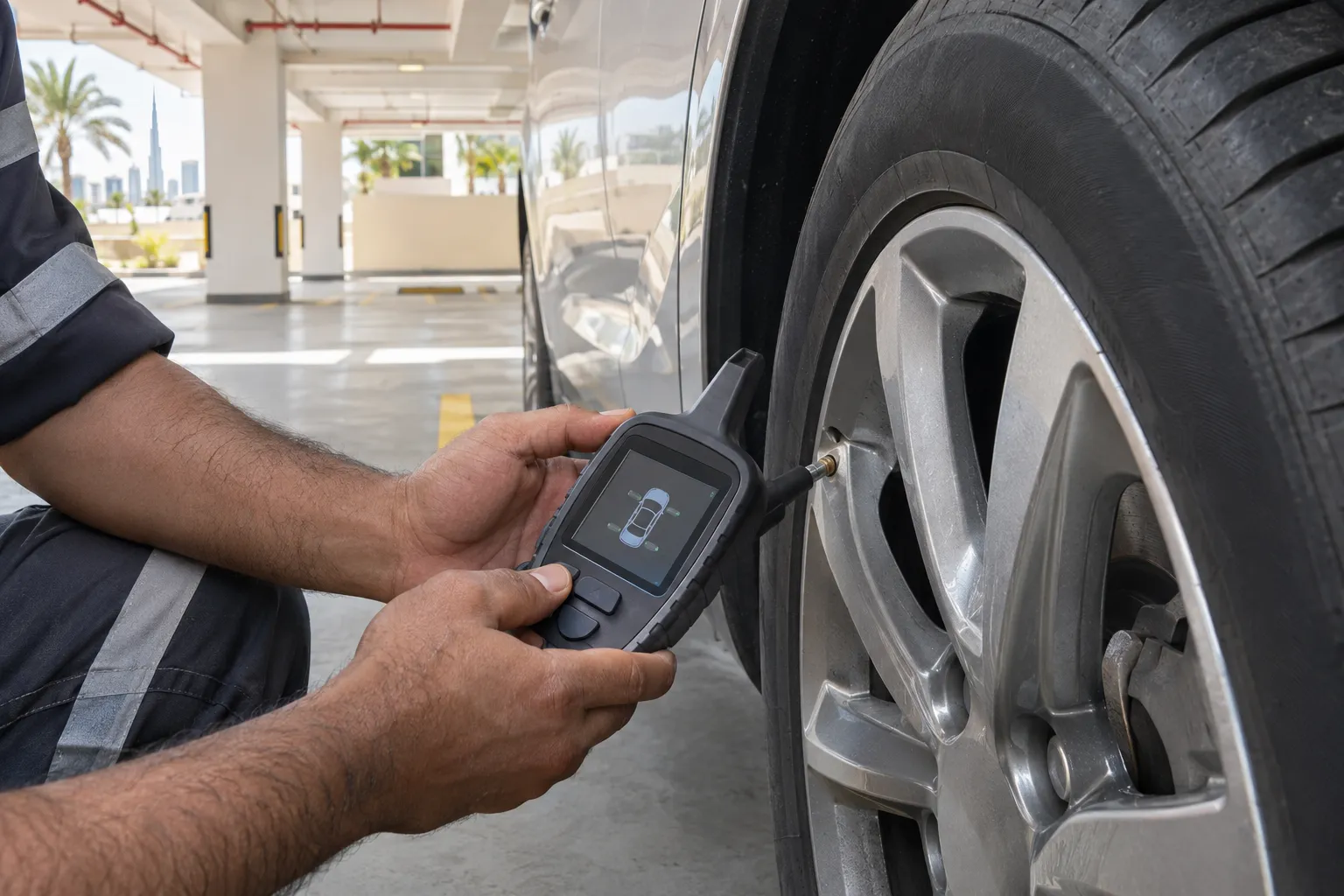
Our TPMS sensor service reads the system with a diagnostic tool, finds which sensor is silent, and replaces and programmes it to the car.
Can you drive with a broken TPMS sensor?
Yes, the car will drive normally, but you've lost your early warning of a puncture, which matters in UAE heat, where an under-inflated tyre overheats quickly. Until it's fixed, check your pressures with a gauge every week. A faulty TPMS can also lead to a failed technical inspection on some cars, so it's worth sorting before your renewal.
Read our tyre pressure guide for the cold-pressure basics, and see nitrogen vs air if you've been told nitrogen will stop the light coming on. It won't.
Pressure light won’t go off? Tell us your car and what the light is doing, and we’ll diagnose the TPMS.
Questions drivers ask
How low does a tyre have to be for the light to come on?
Typically around 25% below the recommended cold pressure. On a tyre that should be at 35 psi, that is roughly 26 psi, which is already low enough to overheat and wear the tyre.
Why does my tyre light come on in the morning and go off later?
Pressure drops overnight as the tyres cool, then rises as they warm up while driving. If the light comes on cold, the pressures are borderline. Inflate them to the placard figure.
Can I drive with the tyre pressure light on?
Only far enough to check and inflate the tyres safely. If a tyre is visibly low or keeps losing air, fit the spare or get help rather than driving on it.
How long do TPMS sensor batteries last?
Usually several years, but it varies by sensor and driving. The batteries are sealed, so when one fails, the sensor is replaced and programmed to the car.