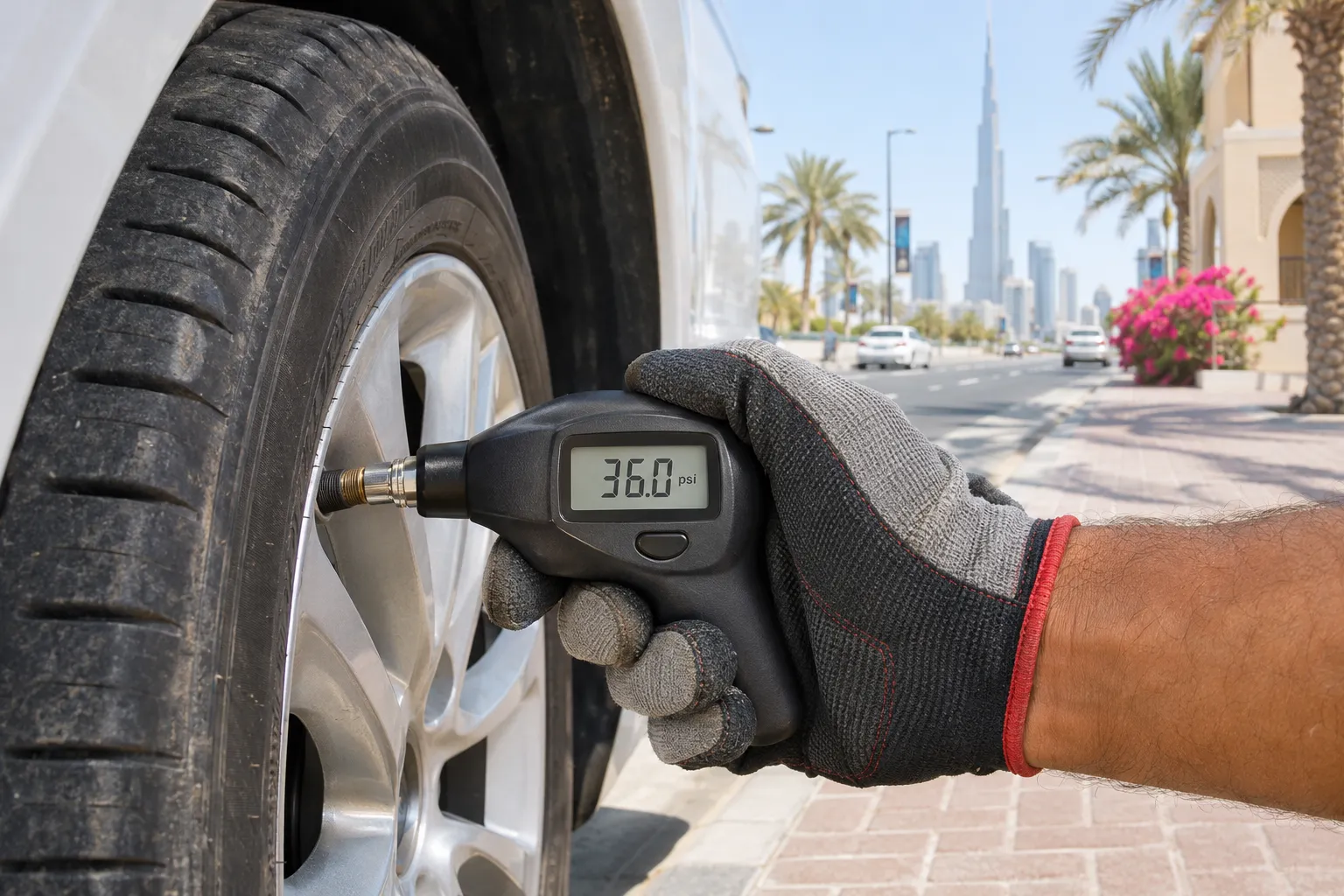
A tyre pressure check sets all four tyres, and the spare, to the cold pressure your car maker specifies, which is printed on the placard in the door jamb, the fuel flap or the handbook. TireFix does it at your home in Dubai, Sharjah and Abu Dhabi before the car has warmed up, and we check for slow leaks while we are there.
It is included free with any other TireFix service. Our tyre pressure guide explains the numbers if you want to check them yourself.
When you need it
- The TPMS warning light is on
- You are about to drive long distance or carry a full load
- The car feels softer or heavier to steer than usual
- You have not checked the pressures in over a month
- Before and after summer, when temperatures swing
What the technician checks
- Cold pressure in all four tyres and the spare
- Your car's placard figure, front and rear, normal and full load
- Valves and caps for leaks
- Tread for screws or nails that explain a low tyre
- TPMS reading against the gauge
What the starting price covers
- Checking and setting all four tyres and the spare
- A leak check on any tyre that was low
- A TPMS reset where the car allows it
What can change the final price
- A puncture repair if we find a leak
- Valve replacement
- TPMS sensor diagnosis if the light will not clear
Where the work is done
A pressure check is done wherever the car is parked, ideally before it has been driven, so the tyres are cold.
Workshops: Al Quoz workshop (Dubai), Sharjah workshop (Sharjah), Mussafah workshop (Abu Dhabi).
The right pressure is on the placard, not the tyre
The number moulded into the sidewall is the tyre's maximum pressure, not the pressure your car needs. The correct figure is set by the car maker for your model and load, and it is printed on a placard.
Why cold matters, especially in the UAE
Pressure rises as a tyre warms up. After a drive in the afternoon heat, a tyre can read several PSI higher than it does at dawn. If you let air out to bring a hot tyre down to the placard figure, it will be underinflated once it cools.
For a step-by-step routine at a petrol station, see how to check tyre pressure.
What wrong pressure does to your tyres
Underinflated
- Both shoulders wear faster
- More heat build-up, a real risk in summer
- Heavier steering and higher fuel use
Overinflated
- The centre of the tread wears faster
- Less grip and a harsher ride
- More easily damaged by potholes
Our guide to wear from wrong pressure shows each pattern. If one tyre keeps losing air, book a puncture repair.
Pressure warning light on?
If the TPMS light is on, check all four tyres with a gauge first. If the pressures are correct and the light stays on, the problem may be a sensor, and that is our TPMS sensor service. Read more in tyre pressure warning light: what it means.
Book a pressure check, or add it to another service for free.
Questions drivers ask
What tyre pressure should my car have?
Use the cold pressure on your car's placard, usually inside the driver's door jamb, the fuel flap or the handbook. Most cars sit between 30 and 36 PSI, but your placard is the only figure that counts.
Should I lower my tyre pressure in summer?
No. Set the placard pressure when the tyres are cold, and let the heat raise it naturally while you drive. Lowering it to compensate leaves the tyre underinflated and hotter.
How often should I check tyre pressure?
At least once a month and before any long drive. In the UAE the large temperature swings between seasons make regular checks more important.
Is nitrogen better than air?
Nitrogen leaks a little more slowly, but regular checks with normal air do the same job. See nitrogen vs air in tyres.
Do you check the spare too?
Yes, always. Spares are often badly underinflated, and you only find out when you need one.