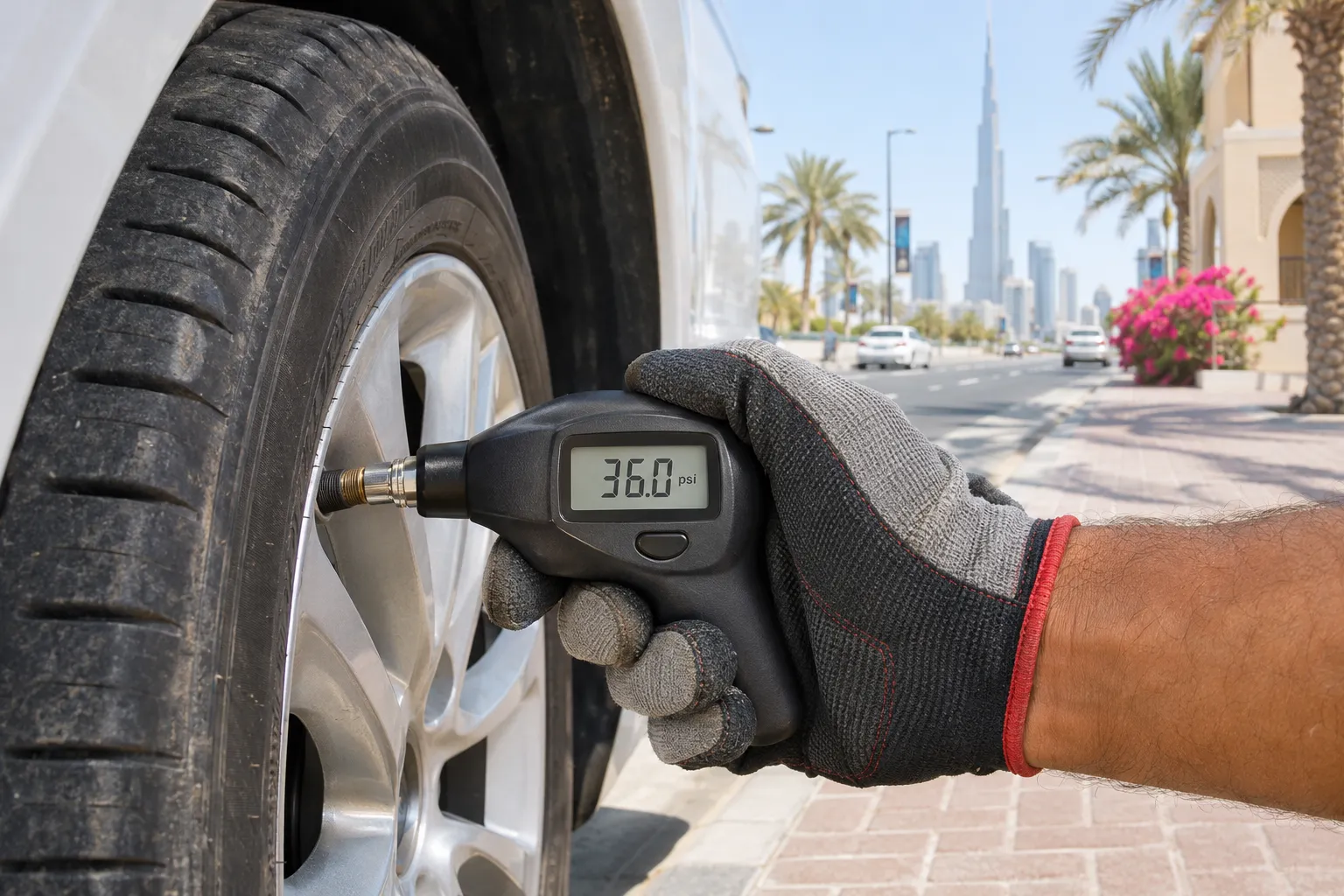
Nitrogen can help a tyre hold its pressure slightly longer than air, but it isn't necessary. Tyres are designed to perform on ordinary air, which is already about 78% nitrogen. If nitrogen is cheap or free with your service it does no harm. Paying extra for it while skipping monthly pressure checks gets things the wrong way round.
In the UAE, nitrogen is often sold on the promise that it keeps pressure stable in the heat. There's some truth in that, so here's what it does and doesn't do.
What nitrogen actually changes
Compressed air
- About 78% nitrogen, 21% oxygen, plus some moisture
- Free or cheap at any petrol station
- Loses pressure slowly through the rubber over weeks
- Moisture can make pressure swing a little more with temperature
Nitrogen fill
- About 93–99% nitrogen, dry
- Seeps through rubber slightly more slowly than oxygen
- Tops up need a nitrogen source, or you dilute it with air
- Behaves almost identically to air as it heats up
Michelin's guidance is clear that its tyres deliver their expected performance on either air or nitrogen, as long as the vehicle maker's recommended pressures are kept. The gas makes much less difference than the gauge.
The heat myth
Every gas expands as it warms, nitrogen included. A tyre set to 34 psi cold in the morning can read several psi higher after a midday drive in August, whether it's filled with air or nitrogen. Dry nitrogen removes the small extra swing that moisture causes, but the main rise in pressure is basic physics and happens either way.
Our tyre pressure guide explains cold pressures and where to find the right figure for your car.
When nitrogen is worth having
- It's included free with new tyres: take it, and top up with air later if you need to. Mixing is fine.
- Cars that sit for long periods, such as a second car or one left while you travel: slower pressure loss is a real advantage there.
- You're paying per tyre at every visit: that money is better spent on a TPMS repair or a quality gauge.
What keeps pressure right in the UAE
- Check monthly, coldBefore driving, or after the car has stood for three hours. See how to check tyre pressure.
- Use the placard figureDriver’s door jamb, fuel flap or handbook. Use the higher “full load” figure when the car is packed for a long trip.
- Fix slow leaksA tyre that needs topping up every week has a leak, usually a nail, valve or rim bead. Nitrogen will not cure it.
- Trust the TPMS, but verifyThe warning comes late, at about a 25% drop. A gauge catches the problem earlier.
Want the pressures and TPMS checked properly? Our pressure check covers all four tyres and the spare.
Book a tyre pressure check if you'd rather we did it. We set the pressures cold, from the placard, and look for slow leaks while we're there.
Why under-inflation is the real enemy in summer
The gas debate distracts from the problem that ruins tyres here: running them soft. An under-inflated tyre flexes more, and that flexing turns into heat in the sidewall and shoulders. On a long summer drive the heat builds faster than the tyre can shed it, which is how tread separations and blowouts start. You can see the slower damage, too: both shoulders wearing faster than the centre.
Air or nitrogen, a tyre left 20% low for a month does more harm than either gas can prevent. That's why the routine matters more than the fill. Our page on wear from wrong pressure shows the patterns, and tyre blowouts in UAE summer explains how heat and low pressure combine.
Questions drivers ask
Is nitrogen better than air for tyres in hot weather?
Only slightly. Nitrogen leaks more slowly and is dry, so pressure is a little more stable, but it still rises as the tyre heats up. Regular cold pressure checks matter far more.
Can I mix nitrogen and air?
Yes. Topping up a nitrogen-filled tyre with air is safe. It just dilutes the nitrogen, and the tyre works normally.
Does nitrogen improve fuel economy?
Only indirectly, by helping a tyre stay at the correct pressure. The same saving comes from simply keeping air-filled tyres properly inflated.
Why do nitrogen tyres have green valve caps?
The green cap is a common marker that the tyre was filled with nitrogen. It tells the next person to top up with nitrogen if they have it, but air is fine too.