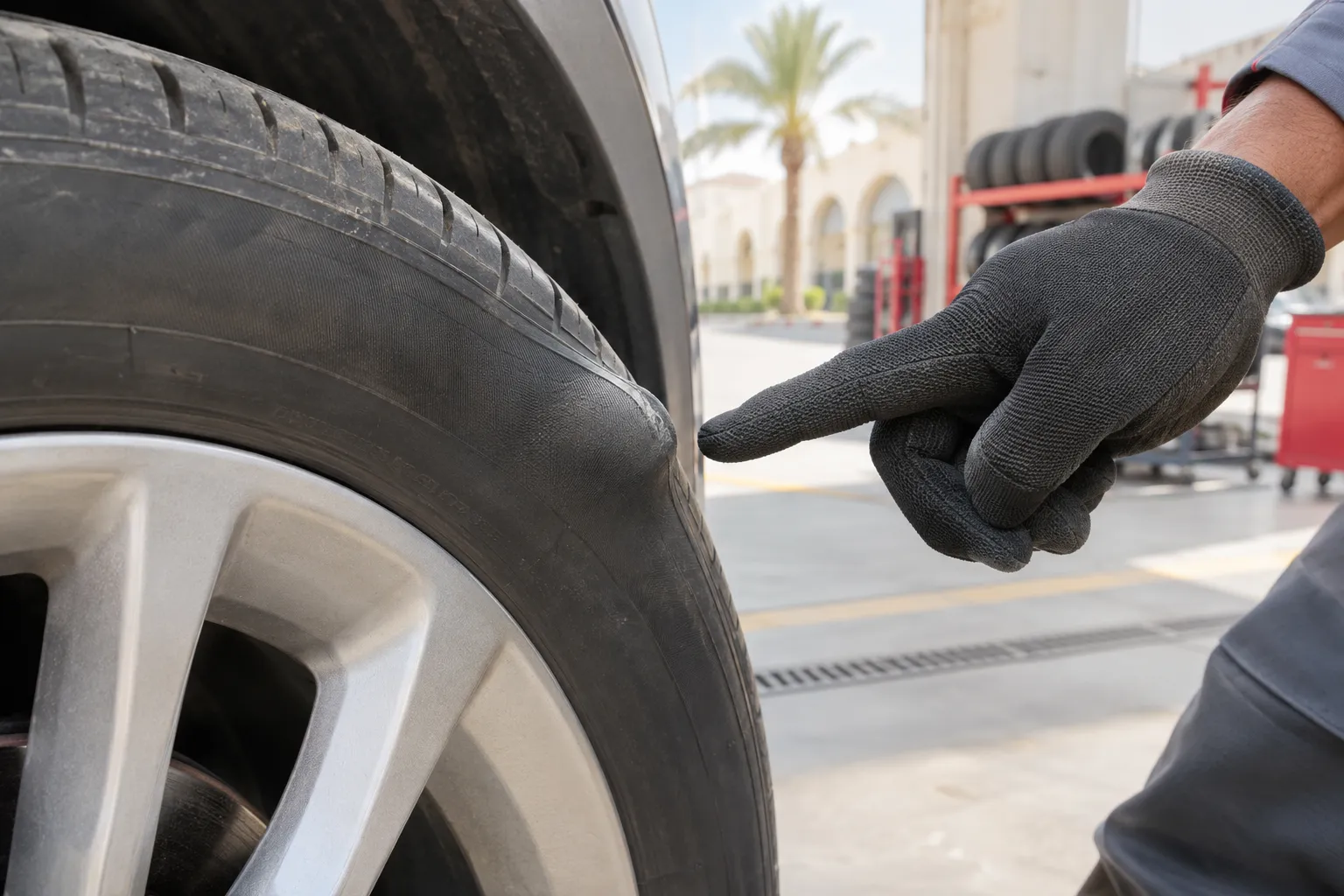
A bulge or bubble on a tyre’s sidewall means the cords inside the carcass have broken and air is pushing the rubber outwards. It cannot be repaired, and the tyre should be replaced before the car is driven any distance, especially at speed or in summer heat.
Bulges usually follow an impact: a pothole, a kerb or a speed bump taken too fast or at an angle. They can appear days after the hit.
What causes a bulge?
Continental explains that bulges are usually caused by driving over kerbs or speed bumps at excessive speed or at the wrong angle. The impact pinches the tyre against the rim and snaps individual cords. With the cords broken, the inner liner holds the air on its own and bulges outwards.
- Speed bumps in residential communities taken too quickly.
- Kerbs clipped while parking or turning.
- Potholes and broken road edges in areas under construction.
- Running a tyre under-inflated, which makes the sidewall easier to pinch.
Bulge or harmless indentation?
Some sidewalls show small, regular dents or dimples. Continental and Michelin both note these are normal on radial tyres: they come from overlapping cord layers during manufacture and do not affect performance. The difference is direction: a dent goes inwards, a bulge goes outwards.
What to do if you find one
- Do not drive on the highwayA bulged tyre can fail suddenly, and heat and speed make it more likely.
- Fit the spare, or call for helpIf you have a usable spare, swap it now. We can also come to you for a spare tyre fitting or bring a replacement.
- Check the rimAn impact hard enough to break cords can also bend the rim. We check it before fitting the new tyre.
Found a bulge? Send a photo and we will bring a matching tyre.
Questions drivers ask
Can a tyre bulge be repaired?
No. A bulge means the internal structure of the tyre is broken, and no patch can restore it. The tyre must be replaced.
How long can I drive with a bulge in my tyre?
You should not drive on it beyond reaching a safe place to change the tyre. A bulge can fail without warning, especially at highway speed or in high temperatures.
Does insurance or warranty cover a bulge?
Bulges from impacts are usually treated as road-hazard damage, not manufacturing defects. Some tyre warranties or insurance policies include road-hazard cover. Check your own terms.