Most tyre blowouts in a UAE summer happen to tyres that were already weak: underinflated, past their age, overloaded or carrying hidden damage from a kerb or pothole. Heat is the trigger, not the root cause. NHTSA names underinflation as the leading cause of tyre failure, because a soft tyre flexes more and builds heat that breaks down its structure, and its research also found that tyres age faster in hot climates. UAE police run summer campaigns on exactly this for the same reason.
A blowout feels sudden from the driver’s seat. When I look at the tyre afterwards, the warning signs were usually there for weeks.
Why heat and tyres are a bad mix
A tyre heats up every time it flexes against the road. On a July afternoon the road surface is far hotter than the air, so the tyre starts hot and gets hotter on a long run at highway speed. A correctly inflated, healthy tyre is designed for this. The problems start when something else is wrong as well.
- Underinflation: the sidewall flexes too much, and the extra heat weakens the cords and the bond between layers.
- Age: rubber hardens and cracks with time and heat, losing its ability to flex safely.
- Overloading: a fully loaded car with luggage for a long drive asks more of each tyre than the daily commute.
- Hidden damage: an old impact can leave a weakened area that only gives way when it gets hot.
Warning signs to look for before a blowout
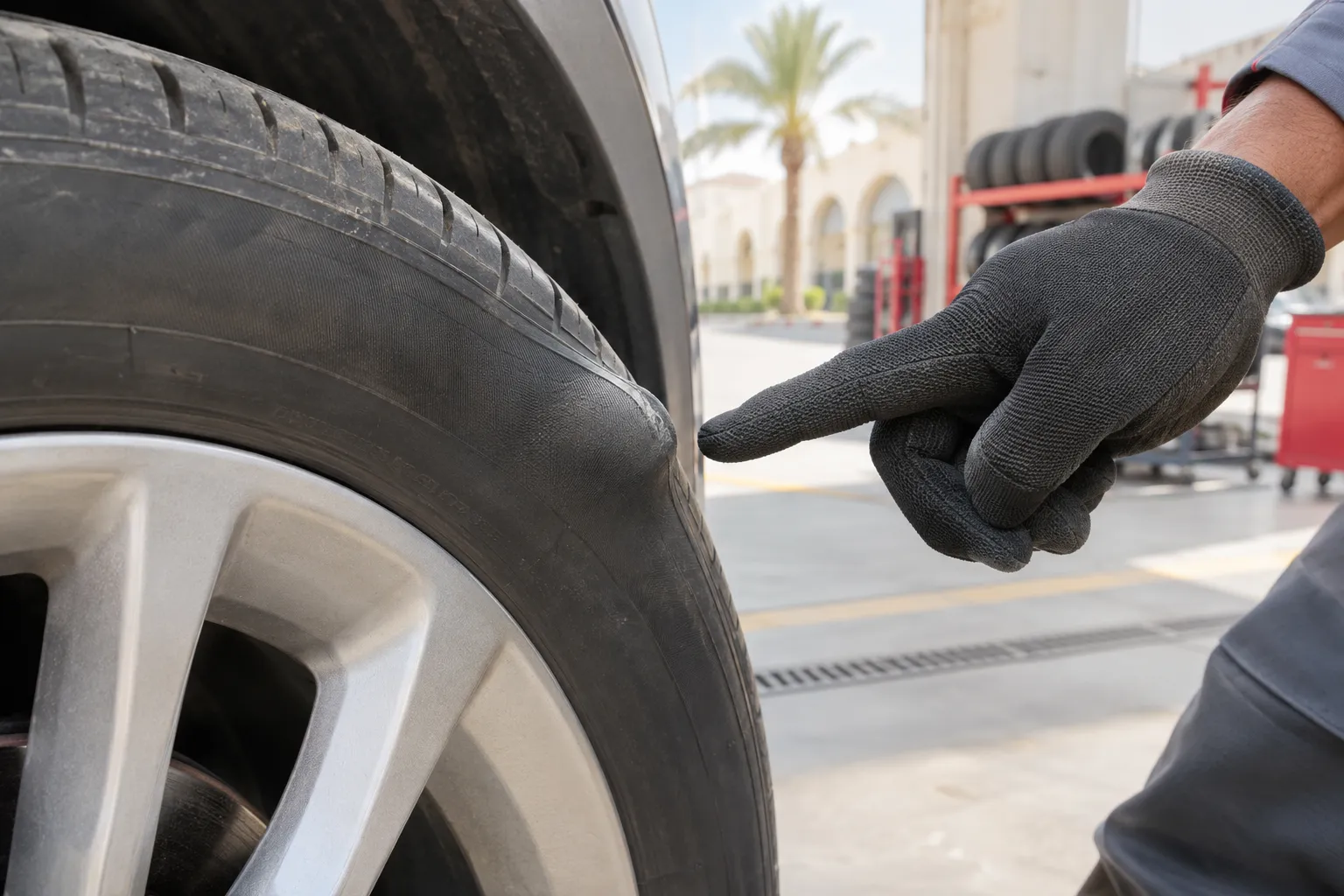
- A bulge or blister on the sidewall
- Fine cracks in the sidewall or between tread blocks
- A tyre that needs topping up every week or two
- Tread worn close to the wear bars, or worn more on one edge
- A DOT date close to or past five years
- A new vibration or thump at speed
Any one of these is a reason to have the tyre checked before your next long drive. Our guides on tyre bulges and tyre ageing and cracking show what each one looks like.
How to prevent most summer blowouts
- Check pressure cold, at least monthlyUse the placard figure, measured before you drive or after the car has been parked a few hours. Pressure rises as tyres warm up, so never let air out of a hot tyre to match the cold figure.
- Check the DOT dateReplace tyres that have reached the age UAE authorities advise, even if the tread looks fine. Our DOT code guide shows where to look.
- Look at the sidewallsWalk around the car once a week. Bulges, cuts and cracks are easy to spot when you look for them.
- Respect the loadFor a fully loaded holiday drive, many placards give a higher pressure. Use it.
- Buy tyres rated for the carFit the load index and speed rating the car maker specifies. Our tyre size guide explains both.
Nitrogen is often sold as the summer fix. It changes pressure slightly less with temperature, but correct pressure checked regularly matters far more. We compare the two in nitrogen vs air in tyres.
What to do if a tyre blows out while you are driving
Hold the steering firmly and keep it straight. Do not brake hard. Ease off the accelerator, let the car slow, switch on your hazards and steer gently to the hard shoulder. Then follow the steps in what to do with a flat tyre on Sheikh Zayed Road: warn traffic, get everyone away from the car and call for help.
Heading on a long drive and unsure about your tyres? Send us photos of the sidewalls and DOT codes.
The fines are real, too
UAE police treat unsafe tyres as a traffic offence. Khaleej Times has reported Dh500 fines and four black points for driving on unfit tyres, alongside summer warnings about blowout risk. Checking costs very little compared with the fine, never mind the damage a blowout can do. A tyre pressure check covers pressure, a visual inspection and the spare.
Questions drivers ask
Why do tyres burst more in UAE summer?
Heat adds stress to every tyre, and tyres that are underinflated, old, overloaded or damaged reach their limit faster. NHTSA identifies underinflation as the leading cause of tyre failure and notes that tyres age faster in hot climates.
Should I lower my tyre pressure in summer?
No. Set pressure to the placard figure when the tyres are cold. Pressure naturally rises as the tyre heats up while driving, and that rise is allowed for in the recommendation.
How do I know if my tyre is about to blow out?
Look for sidewall bulges, cracks, cuts, tread worn to the wear bars, frequent pressure loss and new vibration at speed. Any of these means the tyre should be checked or replaced before a long drive.
Does nitrogen prevent tyre blowouts?
Nitrogen changes pressure a little less with temperature, but it does not prevent blowouts on its own. Regular pressure checks, tyre age and condition matter far more.