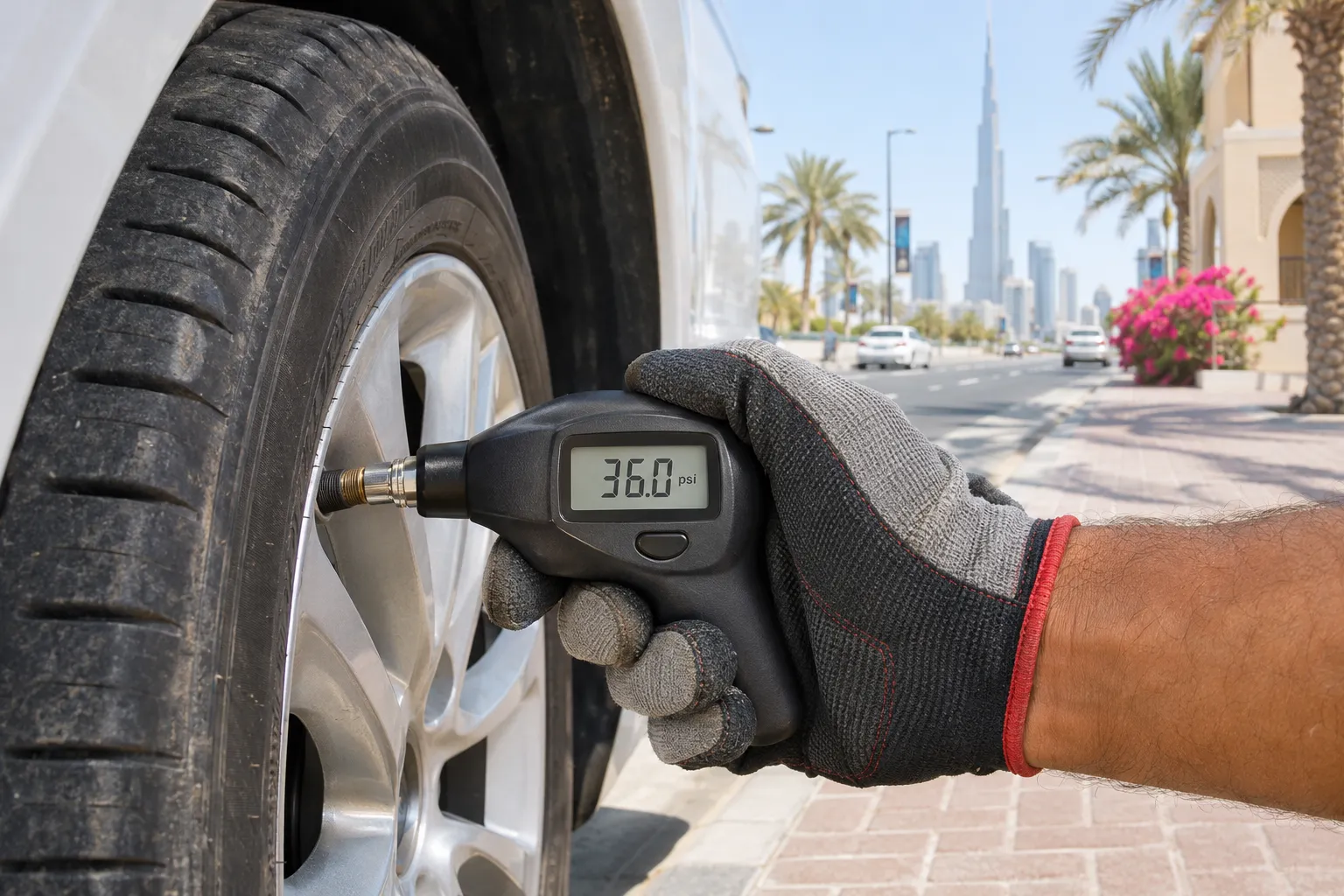
Running tyres at the wrong pressure leaves a clear signature in the tread. Under-inflation wears both shoulders faster than the centre, while over-inflation wears a strip down the middle. Under-inflation is the more dangerous of the two, because a soft tyre flexes more, builds more heat and is more likely to fail on a hot highway.
The fix is simple and free: set the cold pressure from your car’s placard and check it monthly.
Two patterns, two causes
Under-inflated
- Both outer edges worn
- Heavier steering, more fuel used
- Sidewall overheats on long runs
- Most common in summer when pressure is set warm
Over-inflated
- Centre strip worn
- Less grip and longer braking
- Harsh ride over speed bumps
- More easily damaged by impacts
How it happens in the UAE
Drivers often set pressure after a drive or in the afternoon sun, when the tyre is hot and reads high. Once the tyre cools overnight, it is under-inflated. Others let air out of hot tyres, thinking the pressure is too high. Our tyre pressure guide explains why you always check cold.
A tyre that keeps needing air is probably leaking, not just losing pressure naturally. That points to a puncture or slow leak, a valve or a rim seal.
Is the tyre still usable?
If the worn area still has tread above the wear bars and there is no heat damage, such as a discoloured or rough inner sidewall, the tyre can usually stay on once the pressure is corrected. A tyre that has been run very low for a long distance may have internal damage, and a technician needs to look inside it.
Not sure your pressures are right? We will check all four and the spare.
Questions drivers ask
What does under-inflation do to tyres?
It wears both shoulders, raises fuel consumption, makes steering heavier and makes the tyre build more heat. Severe under-inflation can damage the tyre internally and lead to failure.
Is over-inflating tyres better in hot weather?
No. Inflate to the cold placard figure, never above it to compensate for heat. Over-inflation reduces the contact patch, which cuts grip and braking, and wears the centre of the tread.
Can a TPMS stop pressure wear?
It helps but does not prevent it. A TPMS warns only when a tyre is well below its recommended pressure, so a tyre can wear from mild under-inflation for months without a warning. Monthly manual checks are still needed.