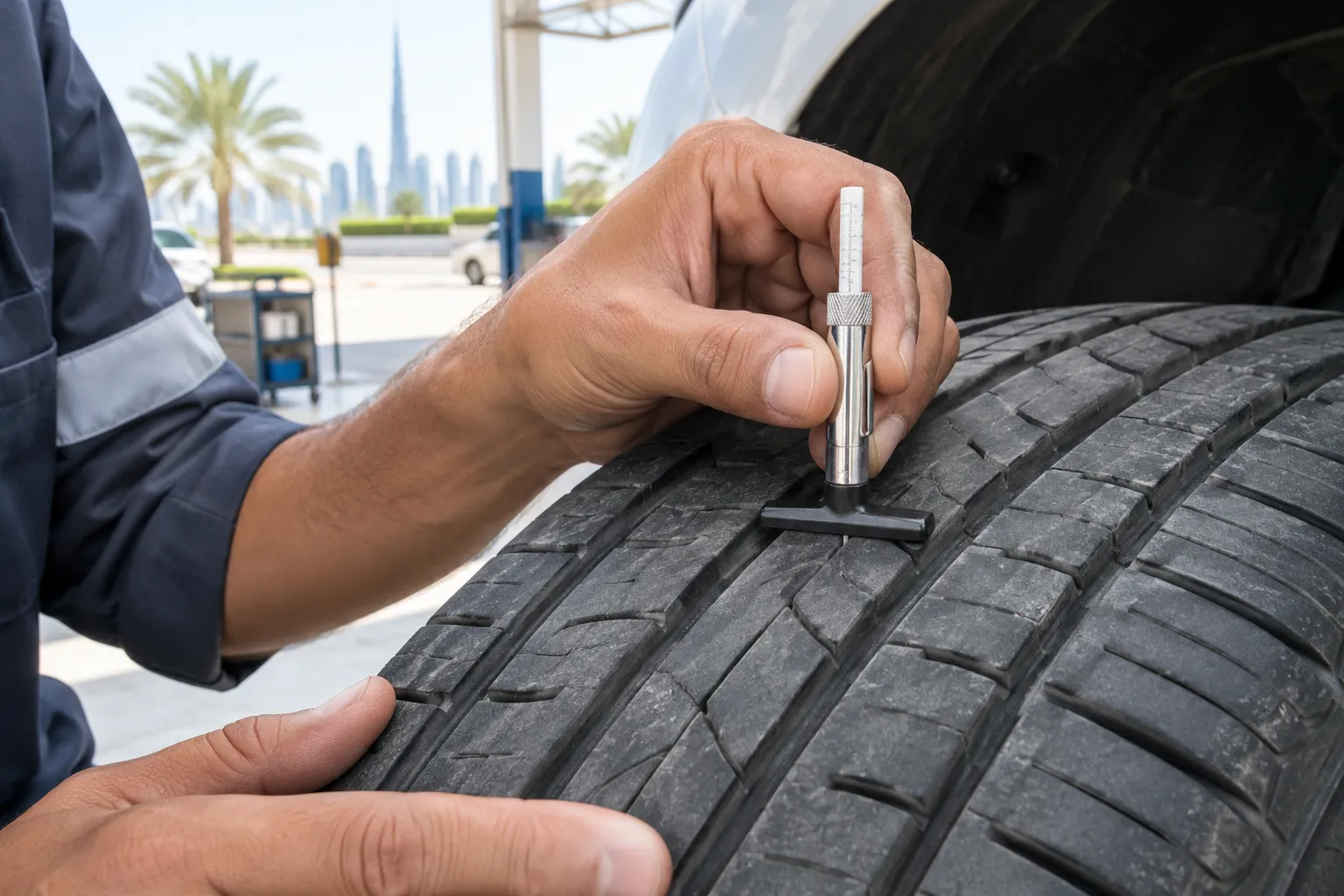
Uneven wear is a symptom, not a fault in the tyre. Each pattern points to a cause: wear on both edges suggests under-inflation, wear down the centre suggests over-inflation, wear on one edge points to alignment, and scalloped patches usually mean imbalance or worn shock absorbers.
Fixing the cause matters as much as replacing the tyre, or the new tyre will wear the same way.
Match the pattern to the cause
| Pattern | Likely cause | What fixes it |
|---|---|---|
| Centre worn, edges fine | Chronic over-inflation | Set pressure to the placard figure |
| Both edges worn | Chronic under-inflation | Pressure checks, and look for a slow leak |
| One edge worn | Alignment (camber or toe out) | Wheel alignment |
| Patchy scallops (cupping) | Imbalance or worn dampers | Wheel balancing and a suspension check |
| Feathered tread blocks | Toe misalignment | Wheel alignment |
Why it happens so often in the UAE
Speed bumps, kerbs and potholes knock alignment out gradually, and heat makes pressure swing between morning and afternoon, so drivers often set it at the wrong time. Long straight highways also hide a small alignment error, because the car only seems to wander slightly. Our page on signs your alignment is out lists what to feel for.
Front tyres on front-wheel-drive cars also wear faster at the shoulders simply from steering and driving forces. Regular tyre rotation evens that out before it becomes a problem.
Can a tyre with uneven wear stay on?
If the worn area still has more than the legal minimum tread and no cords are showing, the tyre can stay on once the cause is fixed. If one shoulder is close to the wear bars while the centre looks fine, the tyre is worn out, because the shallowest point is what counts. Our tread depth guide shows how to measure.
Questions drivers ask
What causes tyres to wear on the inside edge?
Inside-edge wear is most often an alignment problem, usually too much negative camber or toe that is out of specification. Worn suspension parts can contribute. An alignment check confirms it.
Will wheel alignment fix uneven tyre wear?
Alignment stops wear that alignment causes, but it cannot restore tread already worn away. If the worn edge is close to the limit, the tyre still needs replacing.
How often should I check for uneven wear?
Look across the full width of each tread once a month, when you check pressures. Run a hand over it too, because cupping and feathering are easier to feel than see.