Before a long drive, check five things the morning you leave: cold pressure set for the load you are carrying, the spare and the jack, tread depth, tyre age, and the sidewalls for cuts or bulges. It takes about ten minutes and catches the faults that turn into blowouts at 120 km/h on the E11 or E311 in summer.
Long, hot, fully loaded highway runs are the hardest test a road tyre faces in the UAE. Most of the tyre failures we attend on Sheikh Zayed Road involve under-inflation, overloading or an old tyre, and all three can be spotted before you leave.
The 10-minute checklist
- Set pressure for the loadWith the car full and luggage in the boot, many placards give a higher "full load" pressure. Set it cold, before you leave. See how to check tyre pressure.
- Check the spare and the toolsInflate the spare, find the jack, wheel brace and locking-nut key, and make sure you know where they are. Read do you need a spare tyre.
- Look at tread and ageLow tread or a DOT date older than five years is a reason to replace before the trip, not after. See tread inspection.
- Run a hand over each sidewallFeel for bulges and look for cuts, especially if you have been through tight car parks. Any bulge means the tyre must be replaced. See tyre bulges.
- Check the valve capsMissing caps let sand in and cause slow leaks on long runs.
Extra steps for a desert trip
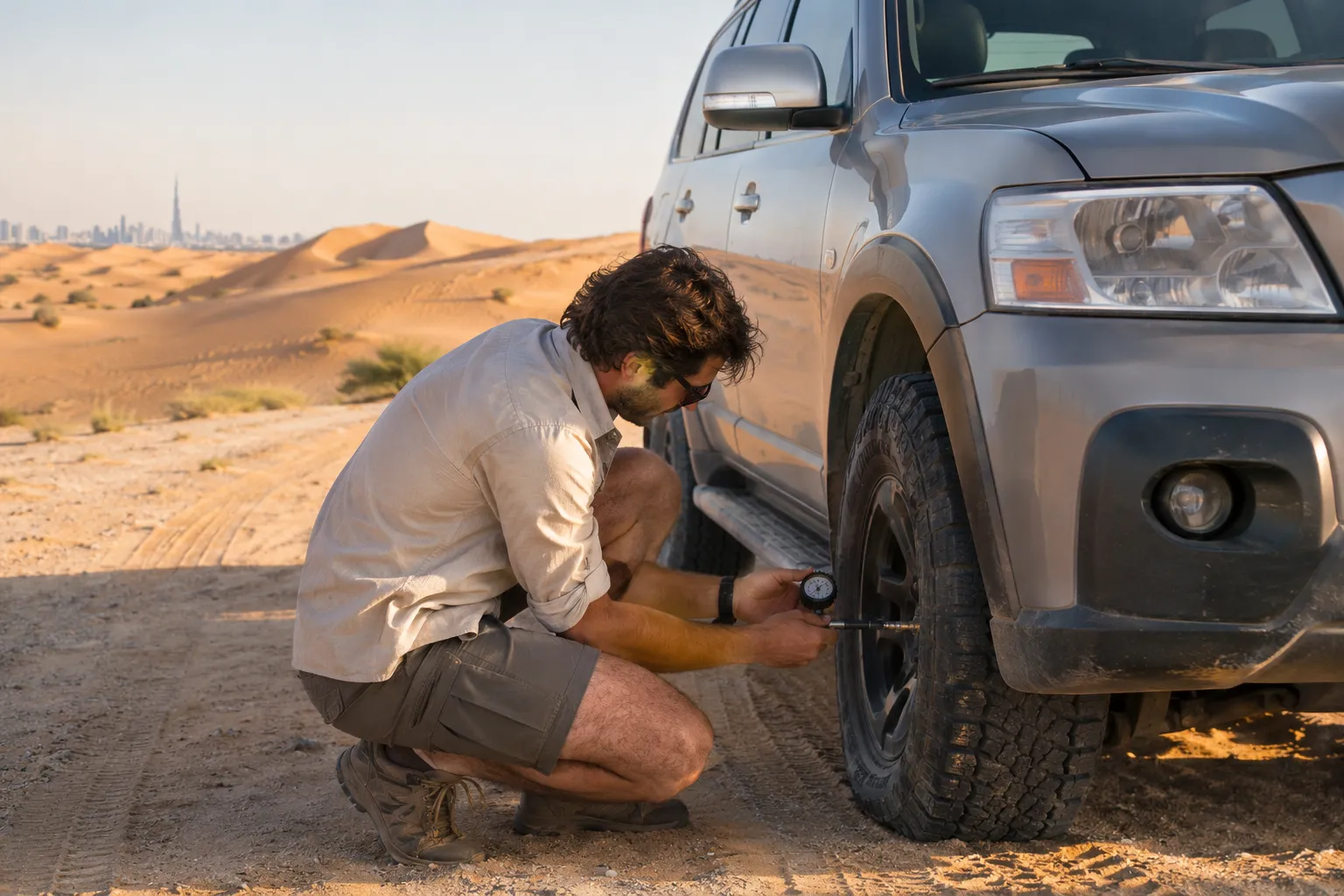
- Carry a reliable pressure gauge and a 12V compressor: you will lower pressures for soft sand and must reinflate before the road.
- Check that the spare is the same size as the road tyres, and that it is not a space-saver if you are driving off-road.
- Look for old cuts or plug repairs near the shoulder; low pressure in sand puts heavy stress on those areas.
- Read our desert driving tyre pressure guide before you go.
If something goes wrong on the road
If a tyre goes down on the highway, move to the far right shoulder or the next exit, put your hazards on and get everyone out on the barrier side. Our guide to a flat tyre on Sheikh Zayed Road covers what to do step by step, and our flat tyre service covers call-outs 24/7.
Leaving tomorrow? We can check pressures, tread and the spare at home tonight.
Questions drivers ask
Should I increase tyre pressure for a long trip?
Use the placard figure for the load you are carrying. Many cars list a higher pressure for a full load, and that is the one to use with passengers and luggage. Set it when the tyres are cold.
How old is too old for a long drive?
UAE authorities advise replacing tyres five years after their manufacture date. On an older tyre with deep tread, cracking and heat can still cause failure on a long, hot run.
Do I need to check the spare?
Yes. Spares lose pressure slowly and are often forgotten. Inflate it to the pressure shown on the placard or the spare itself, and check its age too.
What should I carry for a desert drive?
A pressure gauge, a compressor, a recovery kit and a full-size spare. Lower pressures for soft sand and always reinflate before you return to the road.